
Family Office Program expanding, adds new director
Six years ago, the Indiana University’s Maurer School of Law launched a quiet experiment: a program designed to prepare law students for careers in an industry most of them had never heard of—family offices, the private entities that manage the legal, financial, and philanthropic affairs of high net-worth families.
Today the Family Office Program is drawing prospective students away from higher-ranked schools, placing graduates into elite practices and private offices nationwide, and building something special in legal education: a training ground where trust, humility, and emotional intelligence matter as much as technical skill. And it couldn’t be happening at a more opportune time, said program founder Michael Flannery ’83. While family offices have been around for centuries, most prominently in Europe, the recent explosion of wealth in the United States has ushered in a demand for more family offices here.
Today, family offices collectively manage more than $6 trillion in assets, overseeing everything from investments to philanthropy to intergenerational estate planning—often in deep privacy and with an intense focus on personal trust.
“If you’ve seen one family office, you’ve seen one family office,” Flannery said. And he would know. As former chief executive officer of Duchossis Capital Management, a family investment firm, Flannery has seen firsthand the rapid expansion of family offices around the country. Each is unique, he said, and many have enough personnel to operate like small companies.
“I think the reason family offices have become much more popular of late is that people have decided that they want to be more directly involved in the management of their wealth rather than outsourcing it to various professional service firms,” Flannery said.
Families want in-house lawyers who can navigate complex issues and build relationships that last for decades, he said.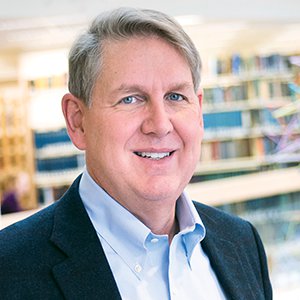 “Working in a family office is the best of everything,” said Professor Bill Henderson, who helped lead the Family Office Program from its inception through this fall. “You’re in an incredibly sophisticated practice, working a wide array of legal subject matters, serving as a true counselor, and, when things are good, developing a close alignment of values combined with a long-term time horizon.”
That intersection of legal training, business understanding, and human connection is what convinced Flannery that the Law School needed a program dedicated to the sector. Not only was the industry growing, but no law school—at least not formally—was preparing students for this niche market.
The JD/MBA connection
Duchossis has been hiring JD/MBA graduates for years. Over that span, Flannery noticed something: students with hybrid training and strong interpersonal instincts thrived in family office environments. They were trusted. They grew quickly. They became indispensable.
One of those Indiana Law interns was Cole Parker. Though the Family Office Program was still years away from being established, Parker developed and honed those critical soft skills that made him the right candidate to establish the roots of what would become Kirkland & Ellis’ Private Investment & Family Office Practice. Parker, who graduated in 2010, now co-leads the practice, which has hired a number of Indiana Law students and alumni over the years.
“That’s the model we hoped for,” Flannery says. “Give students an early experience that becomes a springboard to a remarkable career.”
With the insights that JD/MBA students are well positioned to take on family office roles, Flannery approached the Law School with a proposal: build a program that teaches not just transactional skills, but the subtle, trust-driven advisory mindset families look for.
Teaching the art and science of trust
Flannery, Henderson, and former Dean Austen Parrish worked together to develop an unusually interdisciplinary curriculum that helps teach and develop the skills needed to thrive in a family office environment. Some of the unique coursework students take through the program include:
- Negotiation and interviewing through the lens of complexity science
- Counseling informed by psychology and behavioral economics
- Transaction work shaped by real-world dynamics of wealth management
But the program also prioritizes personal mentorship. Each student receives two mentors: an upper-level student and a professional or alum working in the industry. First-year students attend a spring boot camp, then complete paid summer internships with high-level family offices in Chicago, New York, Indianapolis, Nashville, and beyond.
These placements are the cornerstone of the program—and the reason law firms have taken notice.
“When a student has experience with a sophisticated family office, firms pay attention,” Flannery says. “Demand from law firms, accounting consultancies, investment firms, and banks is rising fast, and Maurer students become instantly competitive.”
A new direction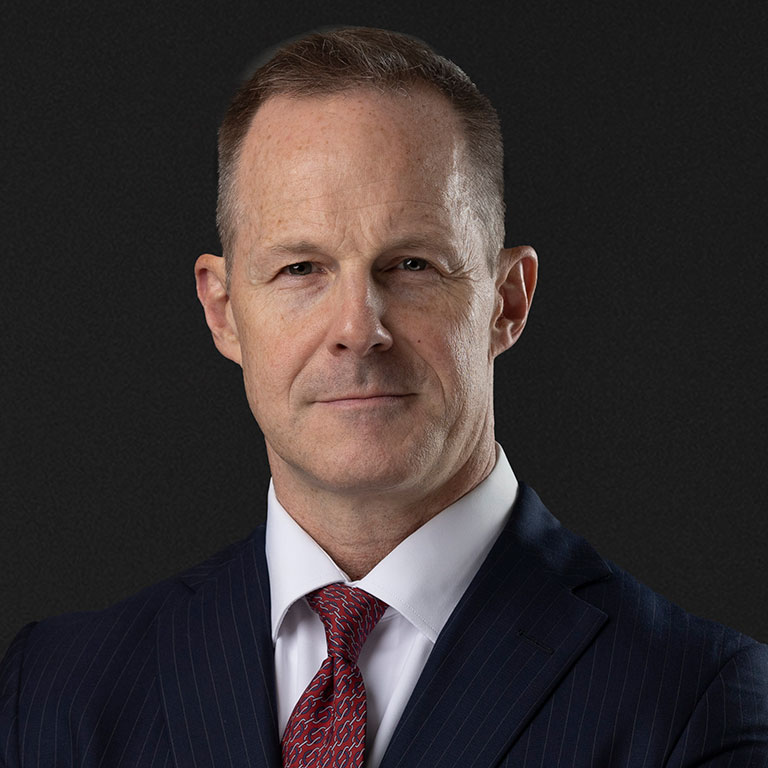 The program’s next leap came this fall with the arrival of Ben Pogue, a former meteorologist turned litigator and mediator whose career path is as unconventional as the Family Office Program itself.
Before law school, Pogue spent years on television tracking hurricanes and tornadoes. Later, he mediated disputes in Charleston’s diverse neighborhoods, navigating issues of trust, fear, and high-stakes conflict.
Pogue’s work caught the attention of Professor Mark Need after his students at Charleston School of Law started dominating transactional competitions. Their edge wasn’t technical—it was relational. They listened deeply and negotiated with insight. Need, who directs the Law School’s JD/MBA program and its Elmore Entrepreneurship Clinic, saw an opportunity to align Pogue’s approach with the mission of the Family Office Program.
When Pogue met Flannery for the first time, the program’s core philosophy snapped into focus.
“Mike said, ‘It’s about trust and relationships,’” Pogue recalls. “I was floored. It was everything I believed about practicing law and teaching it.”
Pogue joined the Law School this fall.
“Our students already love working with Ben,” Henderson said “He is a born teacher and mentor. His hiring is a game-changer for us.”
The program builds momentum
The program has grown deliberately—from one student up to 11 per cohort—but demand has exploded. This year, 28 first-year students applied for six available spots. Some incoming students choose Maurer specifically because of the Family Office Program, turning down scholarships at higher-ranked schools.
Flannery attributes the momentum to outcomes.
“We get emails from students saying, ‘I wouldn’t have this career without the program,’” he says. “And then they want to give back. That culture has taken root.”
The network is now self-sustaining: graduates mentor current students; family offices come back year after year; more firms inquire about interns and hires. Even families with no Indiana connection have joined after hearing about the program’s success.
What makes Maurer different
Most law schools teach transactional drafting and negotiations. But Maurer’s Family Office Program is unique because it is built around a deceptively simple premise:
You can’t advise a family you don’t understand—and they won’t trust someone who doesn’t understand them.
So the program teaches behaviors that foster trust: curiosity, humility, preparation, emotional intelligence, and an orientation toward service. Pogue calls it the “with, not for” mindset—working with clients, not doing things for or to them.
Families notice. Employers notice. Most importantly, students notice.
“You talk to Mike for 15 minutes,” Pogue says, “and students walk away feeling mentored. They feel seen. That’s the power we’re trying to teach.”
A program poised for the future
As both the industry and program grow, the Law School’s ambition is simple: produce the most trusted, capable family-office-ready lawyers in the country. The foundation is already in place—an innovative curriculum, a growing national network, and leadership that understands both the art and science of human relationships.
“We’re tapping into a wave,” Flannery said. “And our students are riding it beautifully.”